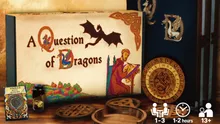
Ashmere, England · 999AD
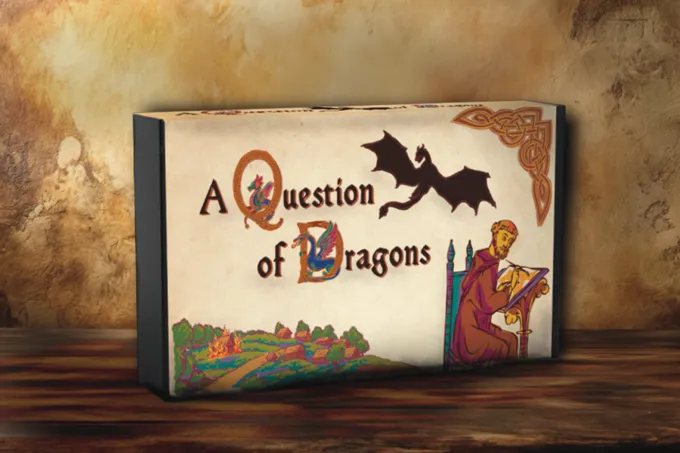
A Question of Dragons
A monk burns to death in his own house, the hamlet blames a dragon, and the Vatican wants to know whether he died a saint.
- Campaign closes 8 October 2026
- Kickstarter takes the payment, not us
- Hand-packed in Grimsby
The case
Sift the notes of a thousand-year-old investigation and decide what really happened to Brother Osric of Ashmere.
The dragon reports
At the turn of the first millennium dragon sightings surged across Europe, and the church treated them roughly the way we now treat reports of things in the sky: it sent someone out to look.
Near Ashmere the reports have a shape to them. Sheep gone. Young women gone. Fire damage and scattered bone in the caves above the village. Reeve Hereward has written to Chester asking for dragon slayers, on the grounds that the menace is interfering with his tax collection.
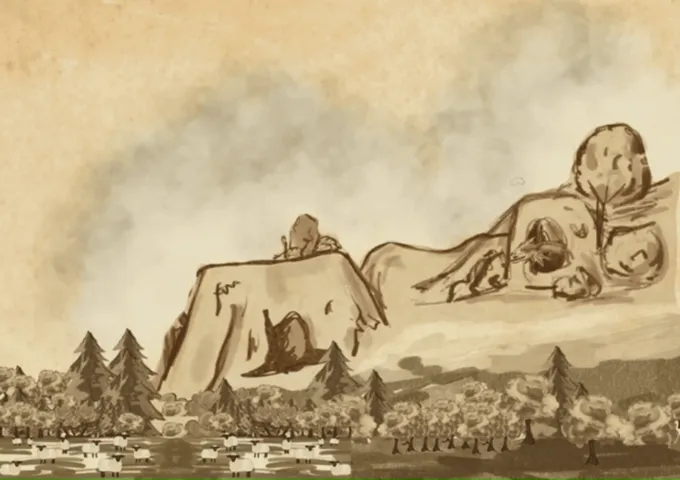
The fire at Ashmere
Brother Osric had been living at the edge of the hamlet for some time, working on illuminations — the illustrated capitals and marginal pictures that run alongside the text of a bible. Ashmere had taken to him. He had grown close to several of the people in it.
Then his house burns with him inside it, and nobody in the village will go near enough to say why. Prior Leofsige is sent from the abbey to find out. A dragon is the explanation everyone in Ashmere seems willing to give him.
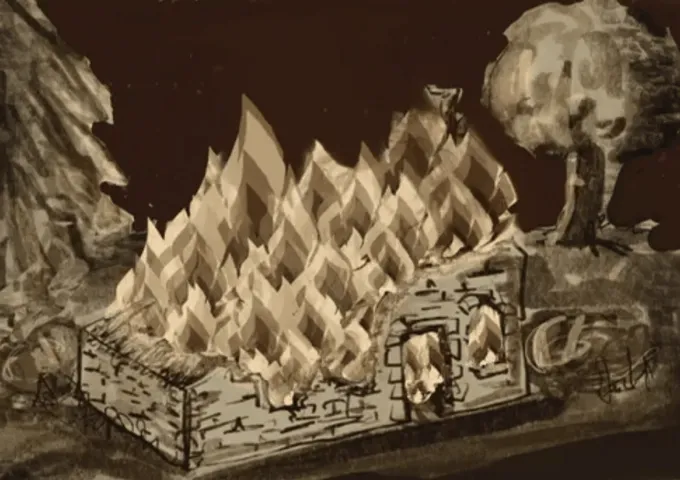
Your brief from the Vatican
You are not investigating a fire. You are assessing a sainthood.
The Vatican wants a determination on whether Brother Osric of Ashmere deserves canonisation, and the evidence is Leofsige's own file: his six reports back to the abbot, Osric's single surviving letter, a map, and a modern forensic report on what was later sealed into the reliquary.
Leofsige was writing to a superior about people he still had to live among. What he would not put in the body of a letter he put in the margins, enciphered. Break that, and you have the version he did not send openly.
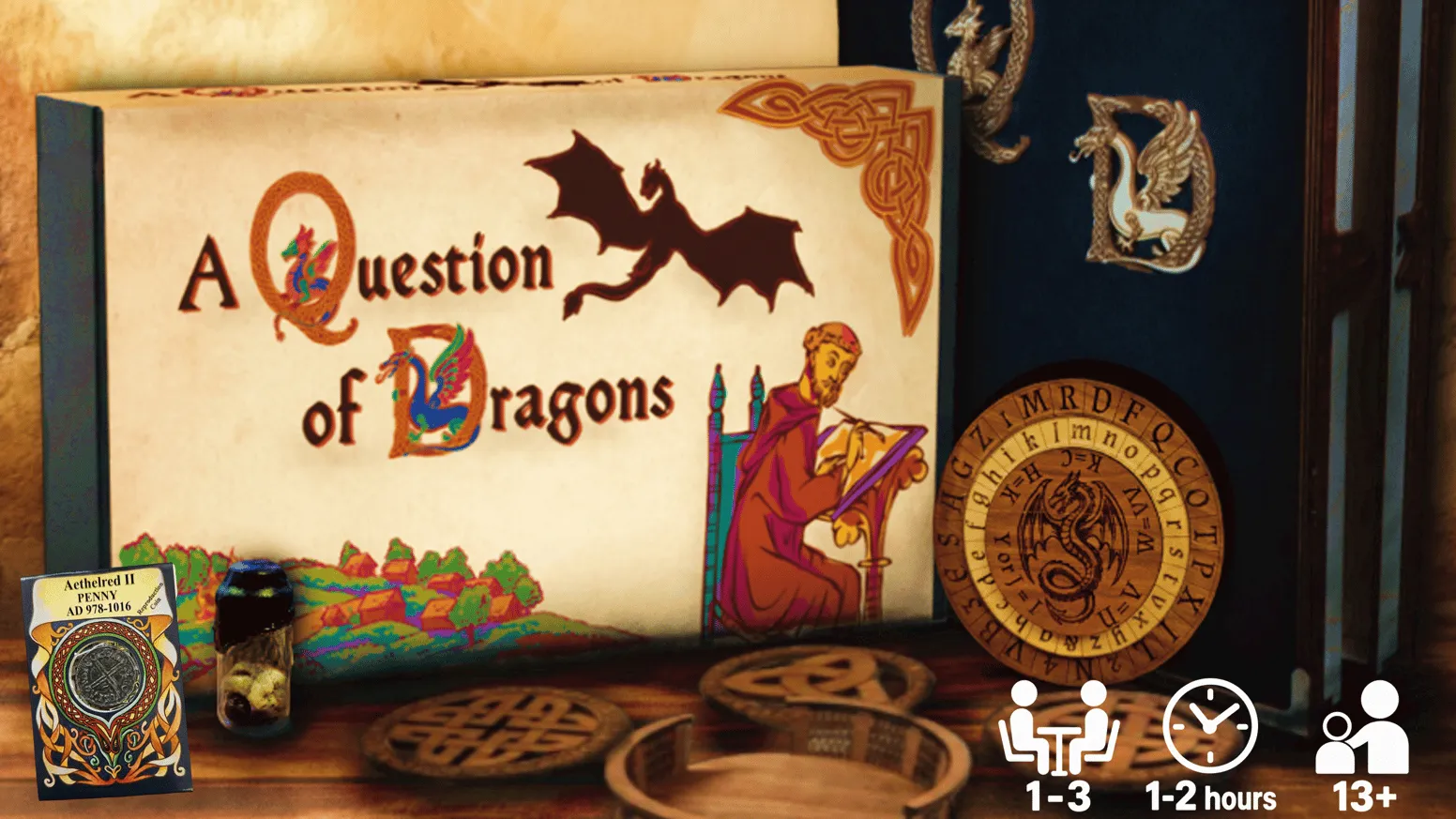
Twenty-six pieces of illuminated lettering and knotwork were drawn for the case by Karakana studios alongside Jo Smedley's own artwork, and they carry evidence as well as atmosphere — knotwork counted cord by cord, dragons with the right number of legs, wyverns and wyrms where wyverns and wyrms belong.
The cipher is the one deliberate anachronism. Alberti's wheel is a fourteenth-century invention, four hundred years after Leofsige, though it was monks who put it to work. It is in the box because it is the right cipher for a monk with something to hide, and the case is honest about borrowing it.
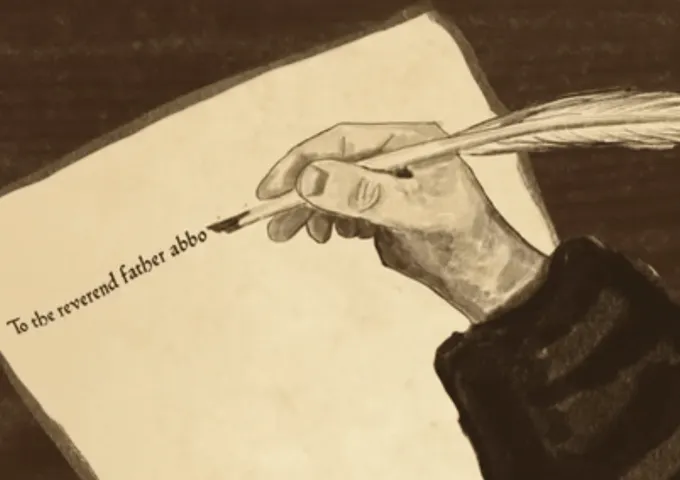
The envelope contents
What's in the box
Everything Prior Leofsige sent back to his abbot, plus the one modern document the Vatican added to the file. The contents below are the standard box — the Kickstarter edition adds three physical artefacts on top, listed further down.
-
Cover letter
Your brief from the Vatican, and what they need you to determine.
-
A letter from Brother Osric to the Abbot
The only thing in the file written by the dead man himself.
-
Six letters from Prior Leofsige to the Abbot
The investigation as it happened, sent back to the abbey one report at a time.
-
Twenty-six illuminations
Illuminated lettering and knotwork by Karakana studios and Jo Smedley. Read them as evidence, or frame them afterwards.
-
Map of Ashmere
The hamlet, the caves, and the distances between them.
-
Modern forensic report
What a present-day lab made of the contents of the reliquary.
-
Alberti cipher wheel
Card in the standard box, turned wood in the Kickstarter edition.
While the campaign runs
Only on Kickstarter
Back the campaign and the box arrives with three artefacts the standard edition won't carry. They are made for the print run and aren't sold here afterwards.
-
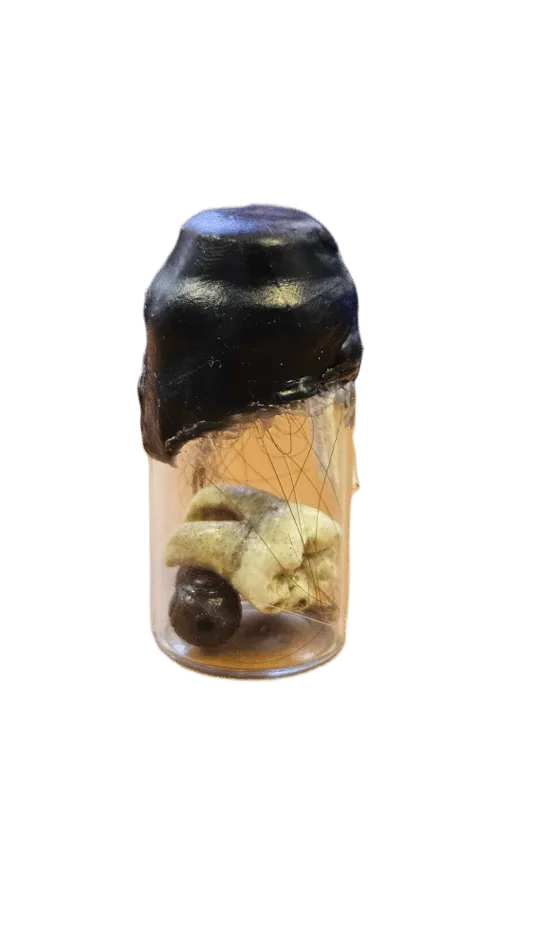
The reliquary
A sealed vial holding the tooth, hair and rosary beads the Vatican had analysed. The tooth is acrylic — no graves were disturbed.
-
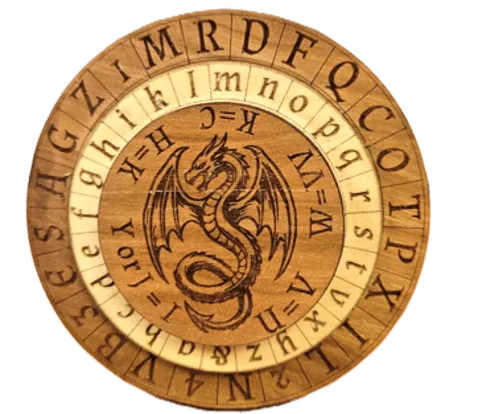
A wooden Alberti cipher wheel
The same wheel the standard box supplies in card, turned in wood and engraved around a coiled dragon.
-
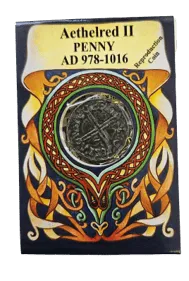
A replica coin
An Aethelred II silver penny — the money Ashmere would have owed Reeve Hereward, struck in Osric's own lifetime.
Kickstarter takes the pledge and Red Herring Games post the box — this shop is not part of that order, so nothing here is charged. Once the print run is packed, the standard edition (£45) comes to this page as a normal case file.
Read the campaign(opens Kickstarter in a new tab)Ciphers & cross-references
What you'll be working with.
999AD
One cipher, worked hard. Leofsige hid what he could not say plainly in the marginalia of his letters, and an Alberti wheel is how you get it back. The wheel is in the box and the case teaches you to use it, so no prior cryptography is needed — but the answer is in how carefully you read, not in how fast you turn the disc.
Ciphers you'll meet
- Alberti cipher
Before you buy
Common questions
I'm new to Cosykiller — where should I start?
Start with An Inheritance of Murder. It's our gentlest case, built for puzzle-minded beginners — Braille, letter-to-symbol substitutions and one-time cipher pads. The Secret of Site Q is the step up: a longer, cross-referencing investigation that's challenging but solvable. Shadows in the Gallery is our most advanced case, layering Playfair, knock code and Caesar ciphers across a post-war art theft — do it once you've worked one of the others.
How old do you need to be to play?
Cosykiller is written mainly for adults, but families can participate together. Every case is rated 14+ for themes of murder, and Shadows in the Gallery touches on wartime violence and post-war trauma, so we'd steer younger players towards An Inheritance of Murder first.
What's inside a Cosykiller box?
It varies by case, but every box contains a cover letter from Fairhall & Brett Inheritance Recovery — the fictional investigators who brief you on the case — followed by the documents like photographs, ciphers, maps, letters, military archives, telegrams, postcards, and other personal effects collected during the investigation. Some cases include dried botanicals, spices, theatre programmes and small physical objects. Each case is a complete story, with the final solution provided at the end. Nothing to download or sign into.
How long does it take to solve a case?
2-4 hours for our single box solves, and between 6-11 hours for some of our longer games. Length of time also depends on the number of players, and how much you like to re-read and how quick you are at spotting and solving ciphers. Most people spread a case over two or three evenings. You can pause whenever you like — put the lid back on, come back next weekend. Nothing expires.
Can I play solo, or do I need a group?
Both work well. Every case is designed to be solvable on your own — no mechanic depends on a second reader. That said, two to four players is where a case shines, because half the fun is arguing civilly about motive over a drink.
I'm stuck on a code — what do I do?
If you become totally stuck on a code, check out the <a href="https://fairhallandbrett.co.uk/" target="_blank" rel="noopener noreferrer">inheritance hunter's website</a> or join the online community where other detectives swap ideas (link included with your order). If you need one on one help then email <a href="mailto:[email protected]">[email protected]</a> with your case number and the document you're stuck on and we'll help without spoiling things for you.
Not in the shop yet
Back it before the deadline.
Other cases
More on the shelf
2-4 hours
Europe 1946
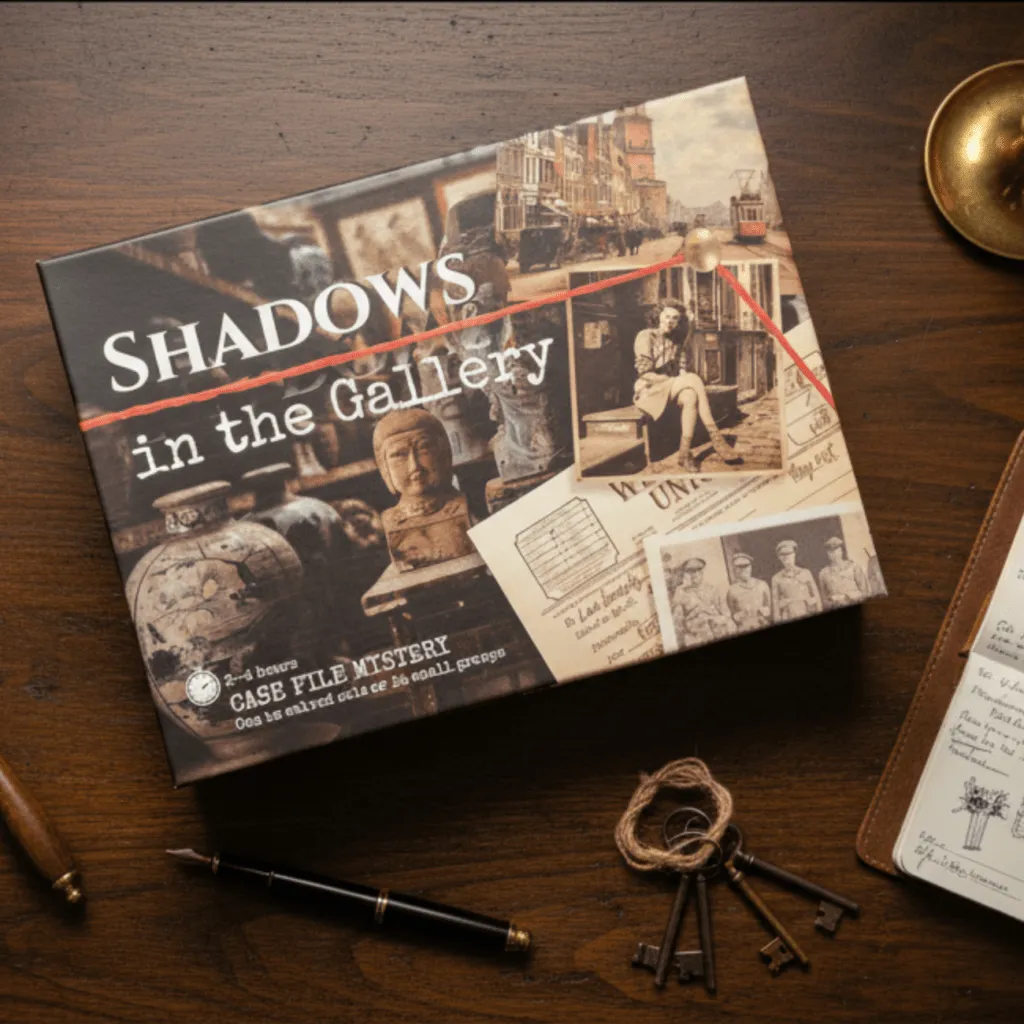
Shadows in the Gallery
A body discovered in a bricked up cellar unlocks the start of a cold case investigation.
9-12 hours
Mexico and America 1950s-1980s
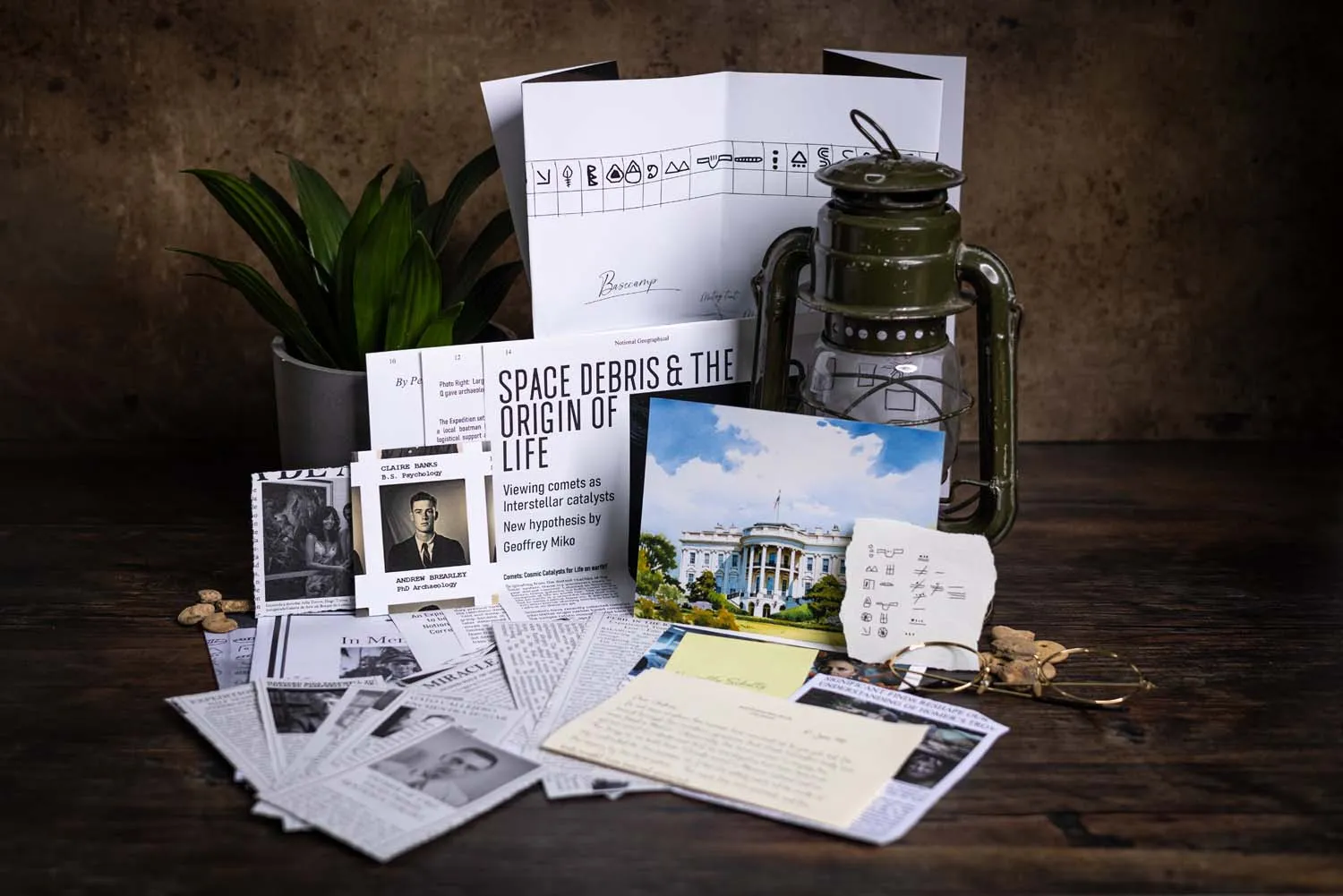
The Secret of Site Q
A body uncovered at an abandoned campsite in the dense Mexican rainforest reveals there was more to a simple tragedy.